Patient Flow · Ophtha-Consulting · Simi Valley, CA
Ophthalmology Patient Flow Is a Different Problem
General medicine scheduling logic does not transfer to ophthalmology. Dilation timing, multi-station pre-testing, subspecialty exam protocols, and procedure-heavy visit types create compounding delays that a single template fix will not solve. I have worked inside 8 ophthalmology practices since 1998. I observe the actual flow, map every handoff and idle window, and redesign the systems that are causing the backup — not the symptoms.
Why Ophthalmology Patient Flow Is a Different Problem
Most scheduling consultants apply general medicine logic to ophthalmology and wonder why it does not hold. Ophthalmology has structural features that create compounding delays that general scheduling fixes cannot address: dilation timing that requires patients to leave and re-enter a workflow, multi-station pre-testing sequences with shared equipment and tech crossover, subspecialty visit types with fundamentally different time profiles, and procedure-heavy sessions where a single overrun cascades through every patient behind it.
These are not problems you can solve by adding a buffer slot or asking staff to move faster. They are systems problems. The bottleneck is usually upstream of where the delay appears — which is why fixing the visible symptom rarely holds.

Six Bottlenecks I See Repeatedly
- Dilation timing not built into the schedule — Practices that do not route dilating patients to ancillary testing or education during the dilation window leave 12–18 minutes of productive time unused per dilating patient. That idle time accumulates across a full session.
- Pre-test batching at shared equipment — When multiple visit types are scheduled without regard for equipment contention, techs queue at the same device and patients wait. Sequencing pre-testing steps around actual equipment availability eliminates most of this idle time without adding staff.
- Exam room as waiting room — Patients placed in an exam room before the physician is ready are technically “in with the doctor” on the schedule and invisible to flow monitoring. The bottleneck hides inside the room-ready wait.
- Late-arrival cascade with no recovery protocol — A single patient arriving 15 minutes late with no defined response procedure can make the afternoon unrecoverable. Most practices improvise this rather than protocol it.
- Counseling competing with exam flow — Premium conversion and dry eye practices that run surgical counseling or device consultations through the same exam rooms as routine visits create unpredictable time overruns that the schedule cannot absorb.
- Checkout pile-up at a single station — When one person handles follow-up scheduling, payment, patient education, and walk-in inquiries simultaneously, checkout becomes a second waiting room. Patients measure their total visit time through the checkout experience, not just clinical time.
Why This Matters Beyond Patient Experience
- Wait time is the most review-damaged operational failure in ophthalmology — A large fraction of negative online reviews for ophthalmology practices cite wait time as the primary complaint. This is not an internal problem. It is a visible reputation problem that affects new-patient acquisition.
- The review gets written in the waiting room — A patient who waits 50 minutes with a smartphone does not arrive home before writing the review. The one-star rating is forming during the wait itself.
- Staff behavior under a broken schedule compounds the perception — When the schedule is behind, staff become visibly stressed. That visible stress signals to patients that the practice is not in control, amplifying dissatisfaction beyond the wait time itself.
- Downstream effects on premium conversion — A patient who waited an hour for a routine exam does not return for a premium IOL consultation. Flow problems suppress conversion opportunities that would otherwise close.
What Most Practices Have Already Tried
- Adding buffer slots — Buffer slots absorb individual delays but do not address the upstream systems producing them. When the buffer fills, the problem returns at full intensity.
- Asking staff to move faster — Speed requests without workflow redesign produce errors and staff burnout, not throughput improvement.
- Reducing patient volume — Seeing fewer patients treats the symptom at the cost of revenue. In most cases, the same volume is achievable with redesigned flow — the patients just move through it differently.
- Changing scheduling software — Software is a container for workflow logic. A bad template in a new system produces the same delays as a bad template in the old one. The logic has to change first.
The bottleneck is almost never where the delay appears. By the time the waiting room is full, something upstream already failed an hour ago. That is what the audit finds.

The Audit Phase: What I Actually Observe
Before any redesign work begins, I spend at least one full clinic day on-site observing the practice as it actually runs — not as it is described to me. I time each station transition, document every handoff, and map dilation routing, exam room readiness, and checkout sequencing independently. The purpose is not to confirm a hypothesis. It is to find what is actually producing the delay, which is frequently not where the team thinks it is.
What Gets Observed During the Audit
- Patient arrival through checkout — timed at every station transition, with handoff delays recorded separately from active service time
- Dilation routing: how dilating patients are currently handled during the wait window and where productive pre-testing time is being left unused
- Exam room readiness: time between patient room placement and physician entry, with a root-cause breakdown of every delay category observed
- Pre-testing station sequencing: equipment contention points, tech crossover patterns, and idle gaps in the pre-testing workflow
- Checkout flow: whether post-exam checkout is creating a secondary queue and what is driving it
- Visit type segmentation: new patient, established, post-op, and procedure visits are timed separately because they have fundamentally different time profiles and most practices treat them identically
What You Receive After the Audit
- A written patient journey map with timed observations at each station, broken out by visit type
- A bottleneck summary identifying the primary and secondary constraints driving wait time, ranked by impact
- A scheduling template assessment: what the current template assumes versus what the observed data shows
- A staffing ratio analysis: whether current staffing levels are sufficient for the observed volume or whether the constraint is workflow rather than headcount
- A prioritized recommendation list for what to change first, what to change second, and what is structural and not fixable without a larger intervention
Honest Scope Notes
- The audit requires on-site observation. I do not offer remote-only flow audits because the data you get from staff descriptions is not the same as the data you get from watching a clinic run.
- I am based in Simi Valley, CA. Southern California practices are my primary service area. Out-of-area practices should ask about travel scope and cost before engaging.
- Consulting engagements are accepted with non-competing practices only, and this is disclosed at the start of every engagement conversation.
- The audit phase is a standalone deliverable. If the findings suggest that implementation support is warranted, that is a separate conversation — not an automatic upsell.
The Implementation Phase: What Actually Gets Redesigned
The audit findings determine what gets redesigned and in what order. Not every practice needs all of the following. The audit report will specify which of these interventions applies to your situation and why. I do not sell a standard package — I scope the implementation to what the data shows is actually broken.
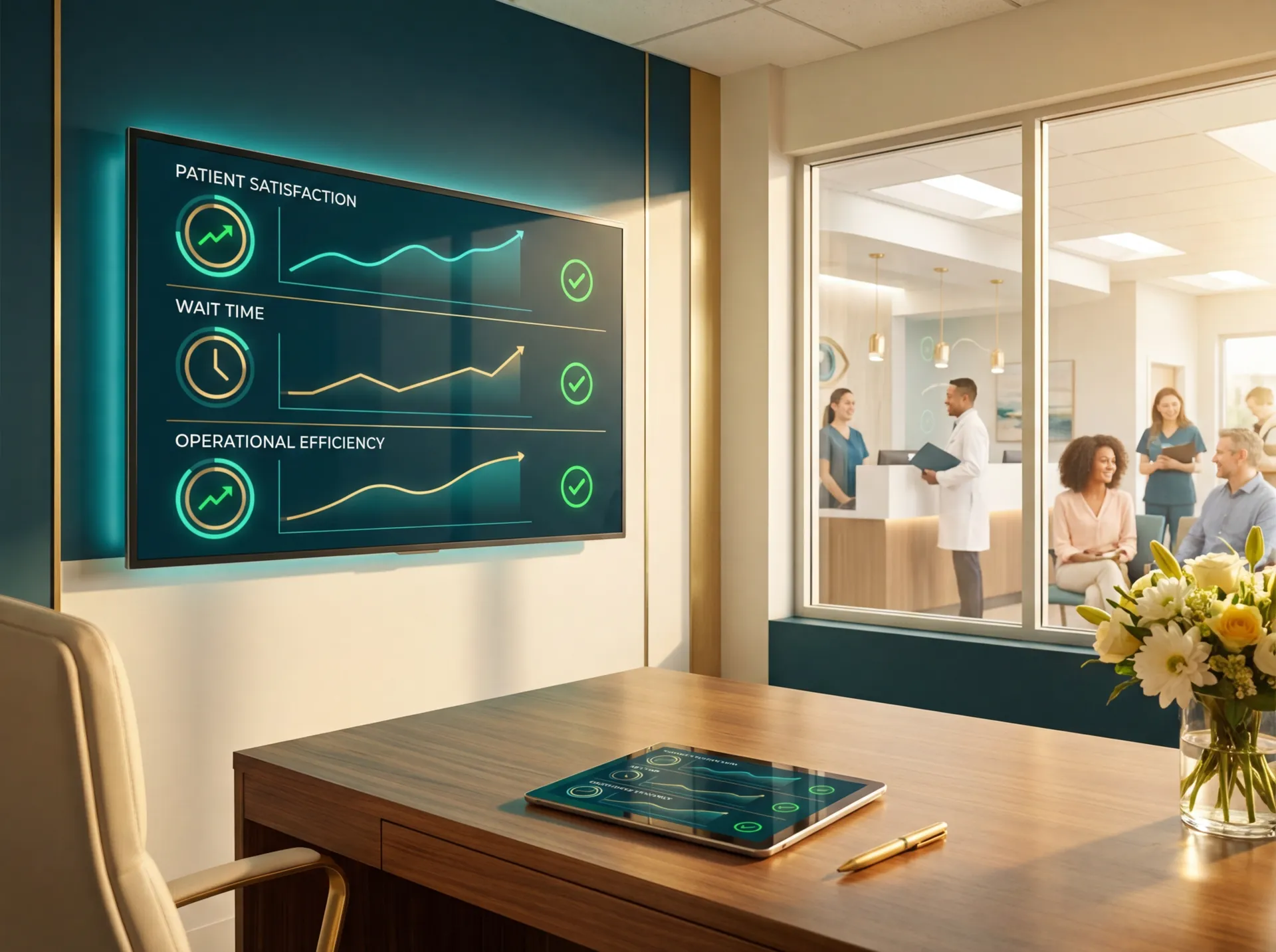
Scheduling Template Redesign
- Visit-type specific time blocks built from observed service times — not inherited assumptions from a prior administrator or a generic template
- Dilation buffer architecture: scheduling structures that route dilating patients to ancillary testing or patient education during the wait window, eliminating idle dilation time rather than just waiting it out
- Late-arrival and no-show response protocols: a defined procedure that preserves schedule recovery without penalizing on-time patients or requiring staff to improvise
- Provider-specific templates: each physician’s schedule calibrated to their actual observed pace, subspecialty mix, and exam room preferences — not a single template applied uniformly
- Session load ceilings: a defined maximum sustainable patient count per session by staffing level, above which wait times predictably deteriorate
Pre-Testing Lane, Counseling Space & Checkout Redesign
- Pre-testing station sequence redesign: steps ordered to minimize patient idle time and eliminate tech crossover at shared equipment
- Parallel lane feasibility assessment: whether your volume and physical layout support parallel pre-testing lanes, and what the realistic throughput gain would be
- Counseling space scheduling: if your practice runs premium IOL or dry eye consultations, isolating that flow from routine exam traffic so surgical counseling overruns do not cascade into the general schedule
- Checkout redesign: separating post-exam scheduling, payment, and patient education tasks so a single bottlenecked staff member does not create a second waiting room at the front desk
- Equipment utilization review: identifying pre-testing equipment that is underused relative to its throughput potential and redesigning workflows to capture that capacity
Staff Protocol Training
- Role-specific training: each team member trained on the portions of the redesigned workflow that affect their station — not a single all-staff session where half the room is hearing information irrelevant to their job
- Handoff communication standards: explicit written protocols for how patient status is communicated between stations, replacing the verbal handoffs that get missed during high-volume sessions
- Recovery protocol training: what to do when the schedule falls behind — a defined response sequence rather than the ad hoc improvisation that typically compounds the original delay
- Front desk template enforcement: training on holding template parameters, managing late arrivals consistently, and communicating wait time to patients proactively rather than reactively
60-Day Measurement & Written Outcome Report
Redesigns that are not measured revert. At the start of every implementation engagement I establish specific, pre-agreed benchmarks for what improvement looks like in this practice — not generic industry averages. At 60 days post-implementation I return for a structured measurement session: we time the same station transitions that were timed in the audit, compare the data, and I produce a written outcome report documenting what changed and what did not.
The written report is your record of what was done and what it produced. If the data shows the redesign held, we close the engagement. If it shows drift or a new constraint, we identify it explicitly. I do not declare success and disappear — the 60-day report is a contractual deliverable, not a courtesy call.
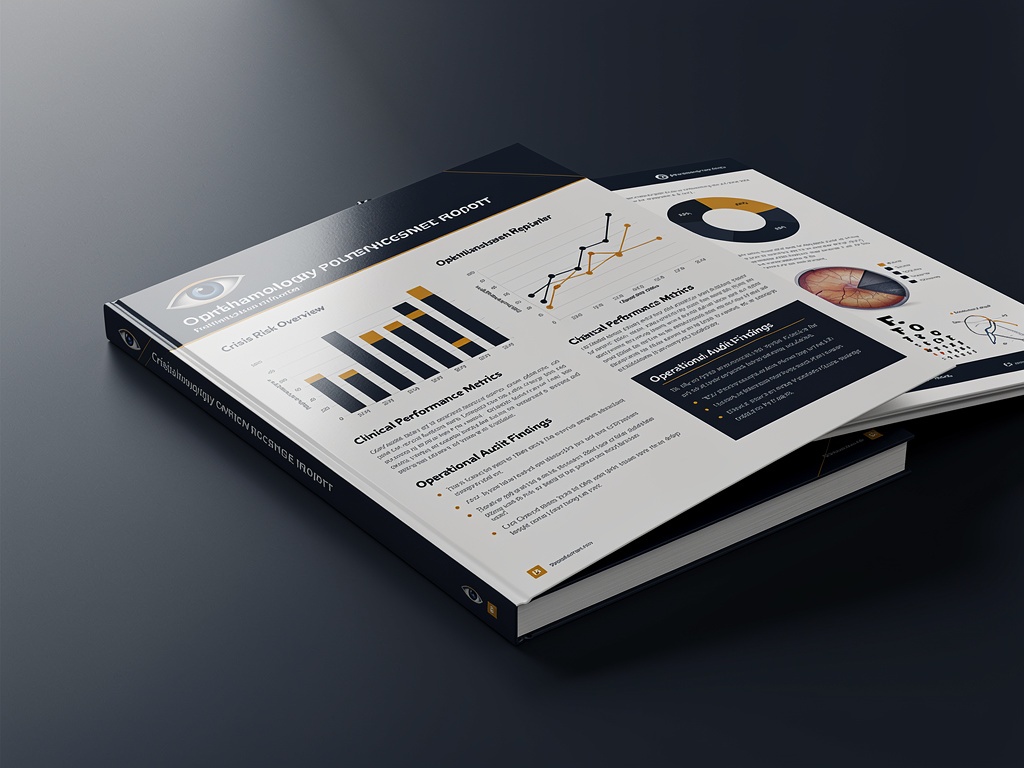
Section 8 — Realistic Outcome Ranges
- Every practice is different. I will not quote you a percentage improvement before I have seen your data. Any consultant who does is guessing.
- In practices where the primary constraint is scheduling template miscalibration — which is the most common finding — wait time reductions of 15–25 minutes per session are achievable once the new template is running consistently.
- In practices where physical layout is the primary constraint — single pre-testing lane with no parallel capacity, exam rooms positioned to create physician transit delays — improvement is real but more incremental. I will tell you this before the engagement begins, not after.
- In practices where staffing is genuinely insufficient for the volume — I will identify the specific gap and the volume threshold that justifies the hire. I will not tell you the workflow can absorb what it cannot.
- The outcome report at 60 days gives you documented, verifiable data on what actually changed — not an estimate.
Who Works On This
Ophtha-Consulting — On-Site, Not Delegated
The audit is conducted by me personally. I do not send an associate to observe your practice and report back. The value of this engagement is in what I have seen across 8 practices since 1998 — that pattern recognition does not transfer through a junior staff member taking notes.
Consulting engagements are accepted with non-competing practices only, and this is disclosed at the start of every engagement.
I am one person. This is a real constraint. Engagements are scheduled in sequence and availability is limited. If you are in a hurry and need someone to start immediately, I may not be the right fit — and I will say so.
Common Questions
What People Ask Before Engaging
How long does the flow audit take?
The on-site observation phase is typically 1–2 full clinic days depending on practice size and number of providers. I need to see at least one full session for each provider I am scoping, which means multi-physician practices require more time than solo practices. Analysis and the written audit report take approximately one additional week after the on-site days are complete.
Do I need to change my scheduling software?
No. Template and protocol redesign is done within your existing scheduling platform. I work with whatever system you have. Software replacement is not part of this engagement unless an audit finding independently supports it — and even then, that is a recommendation you can act on separately, not a dependency for what we are doing here.
Will this require adding staff?
Usually not. The majority of ophthalmology flow problems are caused by workflow sequencing and scheduling template miscalibration, not staffing shortfalls. Most practices can achieve meaningful throughput improvement by restructuring how existing staff time is allocated. When staffing is genuinely insufficient for the volume, I will identify that directly — with the specific role gap and the volume threshold that justifies the hire — rather than redesigning around a constraint that cannot be designed away.
What does realistic improvement actually look like?
Every practice is different and I will not quote you a number before I have seen your data. In practices where the primary constraint is scheduling template miscalibration — the most common finding — wait time reductions of 15–25 minutes per session are achievable once the redesigned template is running consistently. In practices where physical layout or staffing is the binding constraint, improvement is real but more incremental. I will tell you honestly what I can and cannot change before the engagement begins, not after.
Do you consult with practices outside Southern California?
Yes. The audit phase requires on-site presence. Travel to practices outside Southern California is scoped individually — ask about travel logistics and cost before engaging.
Do you work with practices outside Southern California?
The audit phase requires on-site presence — I do not offer remote-only flow audits. I am based in Simi Valley, CA and Southern California is my primary service area. Practices outside the region should ask about travel scope and cost before engaging. I will give you a straight answer on whether the geography makes sense for what you need.
Related Service Areas
If Flow Is Part of a Larger Problem
Patient flow problems rarely exist in isolation. If the audit reveals that the constraint is staff execution rather than template design, that is a training and accountability conversation. If the audit reveals that premium conversion is being suppressed by wait time friction, that connects to how counseling is structured. Four service lines I work in:
- Premium Procedure Conversion — If wait time is suppressing premium IOL counseling uptake, resolving flow is a prerequisite. See services overview →
- Ophthalmic Technician Training — When the audit identifies pre-testing execution gaps, technician training addresses the root cause. See services overview →
- Dry Eye Program Development — Dry eye consultations running through general exam flow create predictable scheduling conflicts. Separating that flow is part of what a dry eye program build addresses. See services overview →
- HIPAA/OSHA & Prior Auth Compliance — Front desk compliance burden is occasionally a contributing factor to checkout and pre-registration delays. See services overview →
Start Here
Start With a Discovery Call
Tell me what is happening in your practice. I will ask a few questions about your current schedule, your volume, and where you think the delay is. If an on-site audit makes sense, we will scope it from there. If it does not, I will tell you that too.
Schedule a Discovery CallNo commitment · Ophtha-Consulting · Simi Valley, CA · (917) 837-8545