Services · Staff Training & Clinical Development
Build a Clinical Team That Performs Consistently — Not Just When You’re Watching
Most ophthalmology practices train new staff on the job, hand them a binder nobody reads, and hope. We replace that hope with a structured competency framework — diagnostic protocols, communication scripts, accountability systems, and career pathways — that produces measurable consistency across every patient encounter.
The Real Training Gap in Ophthalmology
Ophthalmology has one of the steepest skill curves in outpatient medicine. A competent ophthalmic technician needs working proficiency on OCT, Optos, A-scan biometry, visual field testing, applanation tonometry, corneal topography, pachymetry, manual and automatic refraction, and the diagnostic sequencing logic that determines which test runs in what order for which patient type. A competent front desk staffer needs to navigate insurance verification, prior authorization workflows, premium IOL conversations, complaint de-escalation, and the scheduling logic of a multi-physician practice running parallel exam lanes. Both roles are routinely treated as on-the-job training assignments handed to whoever started last month.
The training gap is not a people problem. It is a systems problem. The same staff member who looks unprofessional in a chaotic practice often performs at a high level in a structured one, because consistent performance requires consistent inputs — written protocols, defined competency milestones, accountability checkpoints, and a manager who knows what good looks like. Our engagements install those inputs. The staff member you already employ usually has more capability than your current systems allow them to demonstrate.

Cost 1 — Premium Conversion Revenue Left on the Table
A technician who runs a workup competently but cannot speak fluently about premium IOL options hands the counseling conversation to an exhausted physician at the end of a long exam. The conversation gets compressed, the patient leaves uncertain, and a premium conversion that should have happened does not. Across a practice doing meaningful cataract volume, this single failure pattern can represent $200,000 to $500,000 in annual revenue depending on volume — not because the patients did not want premium lenses, but because the staff member in the workup chair was not equipped to start the conversation correctly.
Cost 2 — Patient Review Damage From Front-Desk Friction
The single most common phrase in negative ophthalmology reviews is some variant of “the front desk was rude.” Front desk staff are not usually rude. They are usually overwhelmed, undertrained, and operating without scripts for the high-friction conversations — billing disputes, insurance denials, scheduling conflicts — that create the rudeness perception. Untrained front desk staff cost a practice in Google star ratings, which compound across years of search results and visibly reduce new patient conversion from referring optometrists.
Cost 3 — Staff Turnover and Replacement
Replacing a trained ophthalmic technician costs roughly six months of that technician’s salary in recruitment time, training investment, lost productivity, and error rate during the ramp-up period. Practices with no defined career pathway lose technicians to practices that have one. The retention math is decisive: investment in training and career structure costs less than the turnover it prevents.
The training gap is not a people problem. It is a systems problem. The same staff member who looks unprofessional in a chaotic practice often performs at a high level in a structured one — because consistent performance requires consistent inputs.

The Three Failure Patterns We Look For
Across 25 years of running and supervising ophthalmology teams, three patterns repeat across very different practice types. Most practices have at least two of them running simultaneously.
- Pattern 1 — The Capable Technician With No Clinical Protocol: A technician who can run every test but performs them in different sequences depending on which physician they are supporting, which patient walked in first, or which exam room is free. Workups take longer than they should, error rate climbs, and physicians cannot rely on a consistent baseline when they enter the exam room. The fix is protocol standardization, not retraining.
- Pattern 2 — The Front Desk Without Scripts for the Hard Conversations: The front desk handles routine check-in efficiently but breaks down on the conversations that actually matter — explaining a denied claim, rescheduling a canceled pre-op, handling a wait time complaint, presenting a premium procedure estimate. The fix is written scripts for the recurring high-friction scenarios, role-played until the front desk staff are fluent in them.
- Pattern 3 — The Manager Who Cannot Define What Good Looks Like: The practice manager knows when something is wrong but cannot articulate what right would look like. Performance reviews become subjective, accountability becomes conflict-avoidant, and high performers leave because they cannot tell whether their work is recognized. The fix is competency frameworks the manager can reference, with defined behavioral markers for each role level.
Track 1 — Clinical Technician Competency Framework
A structured competency pathway aligned to industry-recognized credential progression (COA, COT, COMT) but built around your specific practice’s procedure mix and equipment. Each competency milestone has defined behavioral markers, observation criteria, and a sign-off process. Technicians know exactly what skill level they are at and what the next milestone requires. Managers have an objective framework for performance review and promotion decisions.
Track 2 — Front Desk Communication Protocol
Written scripts for the 15–20 recurring high-friction scenarios that drive most front-desk failures: insurance denials, financial estimate presentations, scheduling conflicts, late-arrival management, complaint de-escalation, premium procedure financial conversations, and post-op question routing. Scripts are role-played in live training sessions until staff are fluent, not just familiar.
Track 3 — Manager Development
Structured coaching for the practice manager or clinical lead on how to run performance reviews objectively, how to conduct accountability conversations without escalating to conflict, how to identify and develop high-potential staff, and how to navigate the personnel decisions that come with growth and turnover. This track is essential for practices with a relatively new manager or where the existing manager has been promoted from a clinical role without management training.
Track 4 — Culture and Career Pathway
Documentation of the formal career pathway your practice offers — from entry-level scribe or front desk through senior technician, lead, and management roles — with defined criteria for each advancement and the training and certification investment the practice will fund. Practices with defined career pathways retain staff at meaningfully higher rates than practices without them.
Why Training Alone Does Not Work Without Accountability
The single most common failure mode in staff training engagements is not the training itself. It is the regression that happens 60–90 days after the training ends, when staff drift back to the old patterns because no accountability system was installed alongside the new protocols. Training without accountability is a one-time cost with a six-month half-life. Training with accountability is a permanent operational upgrade.
Accountability in this context does not mean disciplinary tracking. It means defined observation cadence, written feedback loops, and a manager who knows when to coach and when to escalate. Every staff engagement includes the accountability infrastructure as part of the scope, not as an upsell.
Phase 1 — Staff Operational Audit (10–14 Business Days)
- Two to three days of in-clinic observation of technician workflow and front-desk interactions
- Review of current job descriptions, performance review templates, and any existing training materials
- Confidential staff interviews: current perception of training adequacy, accountability, and career progression
- Last 12 months of patient reviews mentioning staff behavior
- Current turnover history and exit interview data if available
- Manager interview: current accountability and performance management practices
- Deliverable: Written audit report identifying which of the three failure patterns are present and severe; training track recommendations with scope; quantified revenue and retention opportunity; realistic implementation roadmap
Phase 2 — Implementation (4–14 Weeks by Scope)
- Training tracks delivered through structured curriculum sessions, role-play workshops, in-clinic shadowing and feedback, and written documentation — format is closer to clinical preceptorship than corporate training
- The practice manager participates in every track, not just the Manager Development track — the framework must be replicable internally after the engagement ends
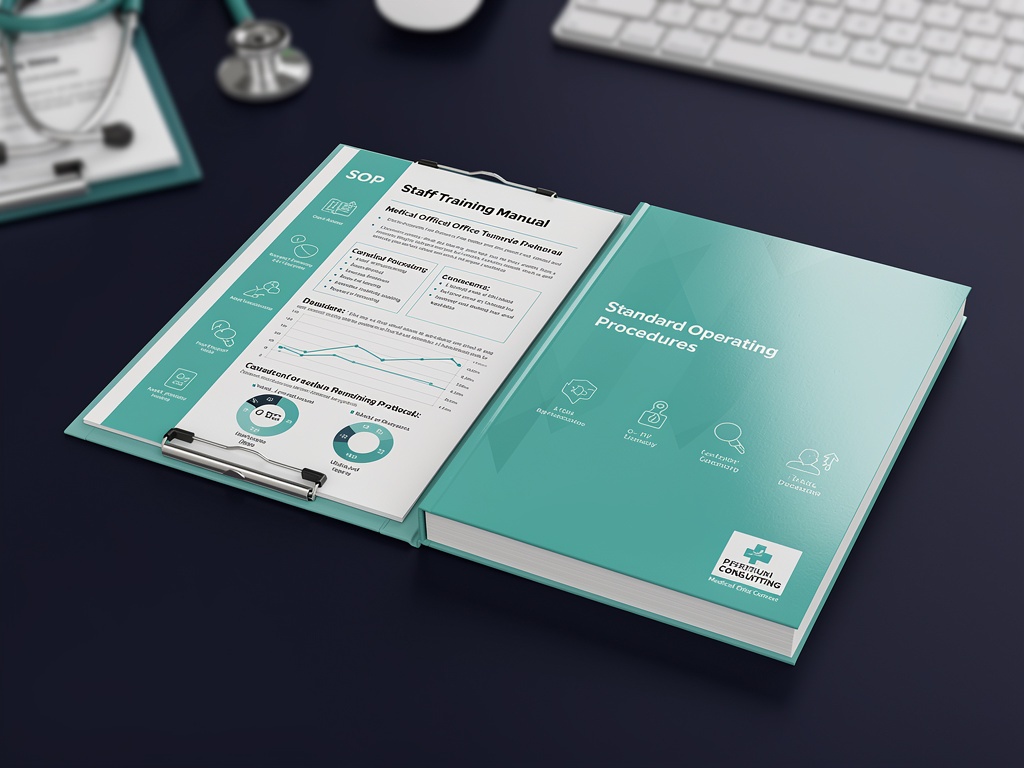
- Every track produces written documentation: protocol manuals, script libraries, competency rubrics, career pathway document — your practice owns these after the engagement
- A single training track typically runs 4–6 weeks; a full multi-track engagement runs 10–14 weeks
Phase 3 — Measurement and Handoff (90 Days Post-Implementation)
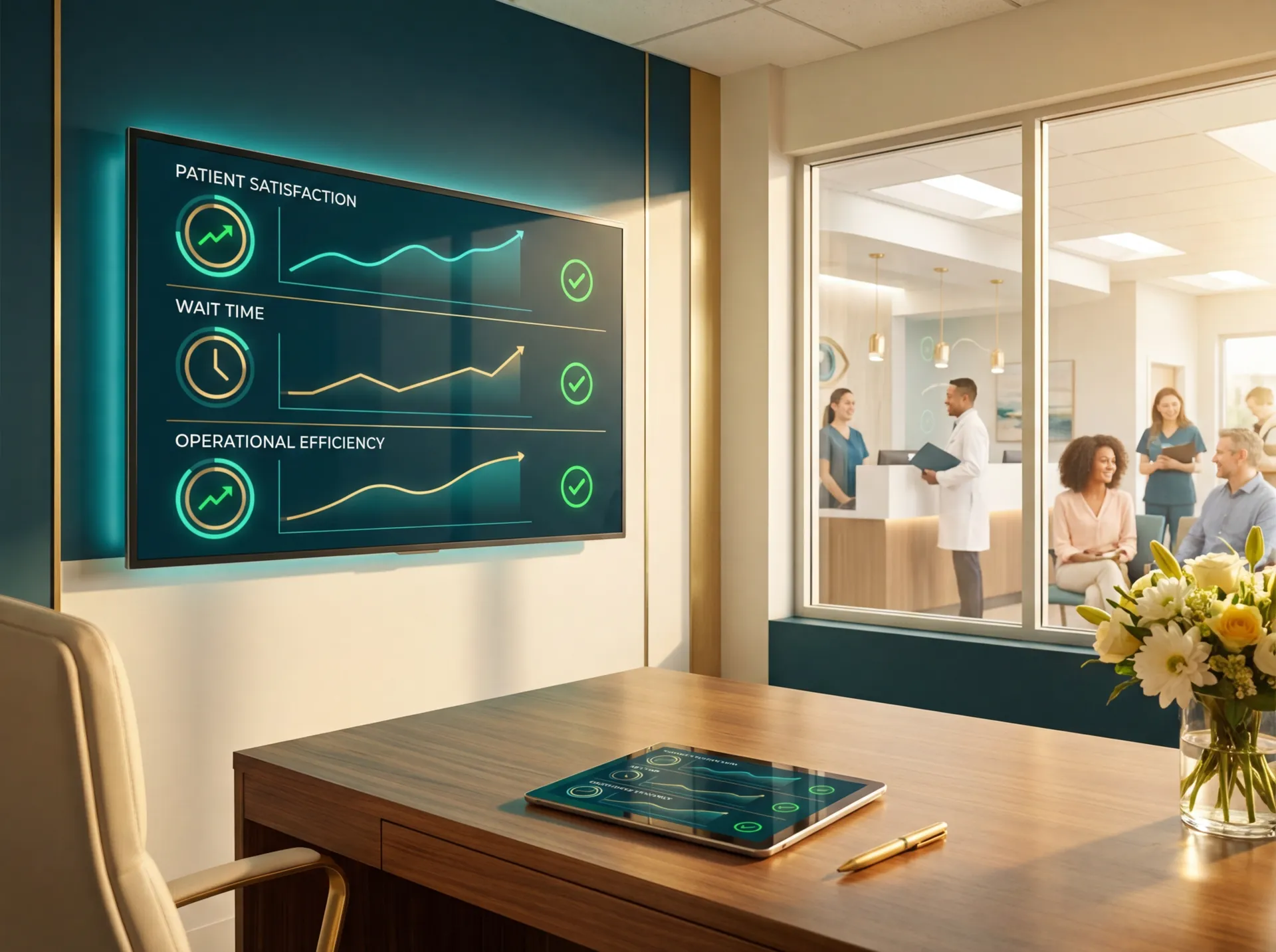
- Metrics measured at 90 days: patient review sentiment on staff behavior, technician productivity per session, front desk call-handling, turnover and retention indicators
- Written outcome report comparing baseline to current state
- Optional ongoing support available as quarterly review sessions for practices that want to maintain accountability rhythm without rebuilding it internally — most practices do not need this once the framework is installed
What Improvement Is Realistic
Staff engagement outcomes vary more than any other engagement type, because they depend heavily on factors outside direct control: the practice manager’s commitment to maintaining the framework, the physician’s willingness to enforce expectations, and staff turnover that happens during and after the engagement.
The improvements documented in prior roles include a 65 percent staff productivity increase at a prior Southern California multi-physician group through standardized training and performance metrics, a 50 percent reduction in pre-surgical errors through verification protocol training, and 90 percent patient adherence on premium IOL education programs. Whether your practice achieves comparable outcomes depends on your specific baseline and your willingness to sustain the framework after implementation. We will tell you, during the audit, what is realistic for your situation. We do not promise specific outcomes on this page because every honest answer requires knowing your baseline first.
Section 11 — Who Works on This Engagement
- Ophtha-Consulting leads every staff training engagement personally — conducting in-clinic observation days, running live training sessions, writing protocol and script documentation, and working directly with the practice manager during accountability framework installation.
- Engagement support staff handle audit data collection, documentation production, staff interview scheduling, and the 90-day measurement phase.
- Staff training is not delegated work. The lead role on every engagement is filled by Diana.
Common Questions
What People Ask Before Engaging
How long before we see staff performance changes?
Early changes appear within the first two to three weeks of training delivery — typically improvements in workflow consistency and front-desk script adoption. Deeper changes — retention, culture, performance review quality — take 90–120 days to become visible. Sustainable changes require the accountability framework to be running at full cadence for a full quarter.
Will the training survive staff turnover?
This is exactly why we install written documentation alongside the training. The protocol manuals, script libraries, and competency rubrics become your practice’s training infrastructure. When new staff are hired, they enter a defined onboarding pathway rather than being told to shadow whoever is least busy. The framework is designed specifically to be turnover-resilient.
What if our manager is the actual problem?
We see this in roughly one engagement in four. The audit phase usually surfaces it, and we have a frank conversation with the physician owner about it before any training contract is signed. The Manager Development track is sometimes sufficient. Sometimes the honest answer is that the manager role needs to be reconsidered — that is a decision the physician owner makes, not us. We do not recommend personnel terminations, but we will tell you what we observe.
Do you work with practices that have unionized staff?
We have not done so. We are not labor relations specialists, and the engagement format assumes management discretion in setting protocols and accountability frameworks. If your practice has unionized staff, the engagement scope would need to be reviewed in advance with your labor counsel.
How is this different from buying a published training curriculum?
Published training curricula are useful and we frequently recommend them as supplementary material. But they are generic. They cannot account for your equipment mix, your physician preferences, your patient demographics, your insurance environment, or the specific failure patterns in your current team. The engagement builds a framework around your specific practice. Published curricula are tools used inside that framework.
Can this engagement be remote, or does it require on-site work?
The audit phase requires on-site observation. Training delivery is most effective on-site but can be partially delivered remotely for practices outside Southern California. Documentation work is fully remote-capable. Pure remote engagements are possible but produce weaker results than hybrid engagements. Diana is based in Simi Valley, CA — Southern California is the primary service area.
Related Engagements
If Staff Training Is Part of a Larger Problem
Staff training engagements pair naturally with two related areas. Practices addressing patient flow problems benefit from staff training because new scheduling templates and rooming protocols require retrained technicians to execute consistently. Practices addressing premium conversion gaps benefit from staff training because the workup phase is where the premium conversation actually starts — long before the patient sees the physician.
- Patient Flow & Wait Time Optimization — New flow protocols require retrained staff to execute. See patient flow page →
- Premium Procedure Conversion Coaching — The workup conversation starts with the technician, not the physician. See services overview →
- Staff Accountability & Excellence — Training without accountability reverts within 60–90 days. See accountability page →
- Right-Hire Interview Evaluation — When the issue is upstream — who is being hired before training begins. See right-hire page →
Start Here
Start With a Discovery Call
A 30-minute discovery call is free, has no commitment attached, and ends with an honest answer about whether a staff engagement is the right starting point for your practice. Sometimes the answer is yes. Sometimes the answer is that a different engagement should come first, or that the issue is not actually a training issue. Either way, you get a clear answer.
Schedule a Discovery Call →No commitment · Ophtha-Consulting · Simi Valley, CA · (917) 837-8545